
How to Create Better Social Media Hooks With AI
Learn how to generate stronger opening lines, match hooks to your audience, adapt them for different platforms, and refine AI-generated ideas before publishing.
A hook is not only a dramatic opening sentence. It can be a question, a problem, a clear benefit, a surprising observation, or a promise about what the viewer will learn.
The purpose is simple: make the first moment of the content relevant enough that the viewer wants to continue.
What Makes a Good Social Media Hook?
Strong hooks usually communicate value quickly. They make it clear why the content is worth watching without revealing everything at once.
The viewer should quickly understand what topic, problem, or outcome the content is addressing.
A hook should connect with the needs, interests, or problems of the actual target audience.
Complicated language can weaken the opening. Clear wording usually works better.
The rest of the video or post should genuinely deliver what the hook suggests.
Why Use AI for Hook Generation?
Creating one hook may be easy. Creating ten different opening ideas for the same topic is where AI becomes particularly useful.
AI can help you:
- generate several hook variations quickly;
- try different tones and angles;
- turn a basic topic into a stronger opening;
- create question-based or benefit-based hooks;
- adapt the same topic for several platforms;
- avoid repeatedly using the same opening structure.
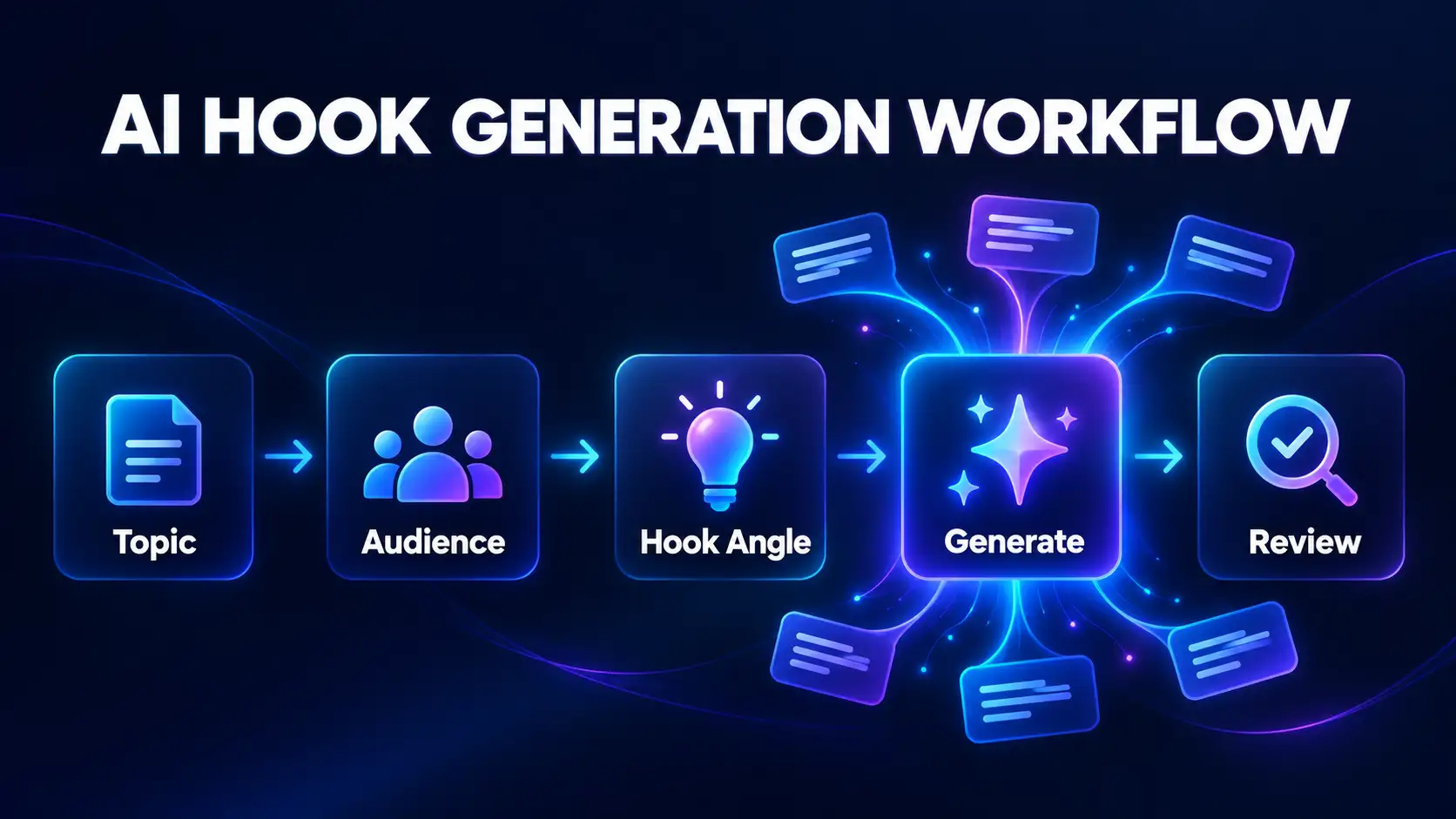
AI is most useful when it gives you several directions to compare. Generate multiple hooks and choose the one that best matches the actual content.
1. Start With the Real Topic
Before generating a hook, define what the content is actually about.
If your topic is too broad, the AI may produce hooks that sound generic. A more specific description usually leads to better results.
Create a hook about productivity.
Create five hooks for a short video explaining three practical ways freelancers can reduce distractions while working from home.
The second instruction gives the AI enough context to produce hooks that are more closely connected to the actual video.
2. Tell AI Who the Audience Is
The same hook will not work equally well for every audience.
A beginner may respond to a simple educational opening, while an experienced professional may prefer a more specific insight.
Useful audience details can include:
- beginners;
- small business owners;
- content creators;
- freelancers;
- students;
- marketers;
- people interested in a specific niche.
Adding the audience helps AI choose vocabulary and angles that are more relevant.
3. Choose the Type of Hook You Want
Different hook structures can create different kinds of interest.
| Hook Type | Purpose | Example Structure |
|---|---|---|
| Problem | Connect with a pain point | “Still struggling with…?” |
| Benefit | Show the outcome quickly | “Here is how to…” |
| Question | Create curiosity or recognition | “What if you could…?” |
| Contrarian | Challenge a common assumption | “You may not need…” |
| List | Set clear expectations | “Three ways to…” |
| Observation | Introduce an interesting insight | “Most creators overlook…” |
You do not need to use the same hook type for every video. Testing different structures helps prevent your content from becoming repetitive.
4. Match the Hook to the Platform
A good hook should also fit the content format and platform.
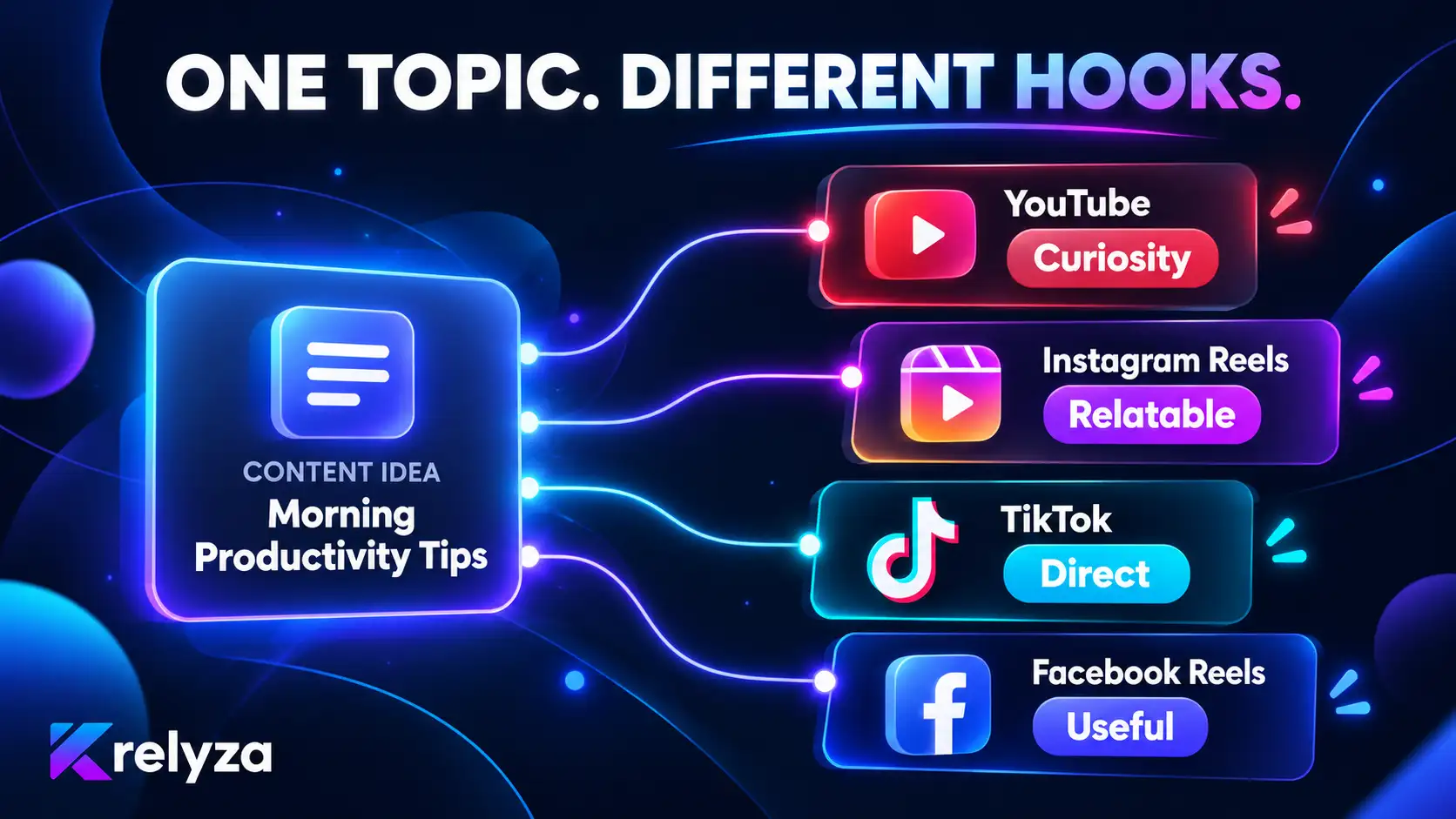
| Platform | Hook Approach | Useful Focus |
|---|---|---|
| YouTube | Can support a slightly more developed opening | Problem, promise, curiosity, or clear video value |
| Instagram Reels | Usually needs to communicate the idea quickly | Relatable problem, benefit, transformation, or curiosity |
| TikTok | Often benefits from immediate and conversational wording | Direct question, insight, surprising statement, or problem |
| Facebook Reels | Should be simple and easy to understand quickly | Useful information, question, story, or relatable situation |
5. Keep Hooks Connected to the Content
A hook can attract attention and still be a poor choice if the rest of the content does not support it.
For example, if the hook promises “the fastest way” to complete a task, the video should actually explain a fast method rather than simply provide general advice.
Strong hooks create curiosity without misleading the viewer.
Topic → Audience → Hook Angle → Generate Options → Review → Record
6. Avoid Overusing Clickbait
AI can easily produce dramatic lines such as “You will never believe this” or “This changes everything.”
Those phrases may sometimes fit entertainment content, but they can quickly feel repetitive or exaggerated when used everywhere.
Instead, ask AI for hooks that are:
- specific;
- clear;
- curiosity-driven without being misleading;
- appropriate for the audience;
- supported by the actual content.
7. Use Dedicated Hook Generators
A general AI assistant can generate hooks, but a platform-specific generator reduces the amount of setup because the task is already defined.
Krelyza currently provides dedicated hook tools for all four supported platforms:
- YouTube Hook Generator
- Instagram Reels Hook Generator
- TikTok Hook Generator
- Facebook Reels Hook Generator
Use the tool that matches your platform, enter the video topic, generate several options, and refine the strongest hook for your content.
8. Generate Several Angles for the Same Topic
One topic can often support several different openings.
For example, a video about improving Instagram engagement could begin with:
- a common mistake;
- a direct question;
- a practical benefit;
- a surprising observation;
- a short list promise;
- a personal experience.
Asking AI to create hooks from different angles gives you more creative choices than simply requesting “five hooks.”
9. Make the Hook Easy to Say
A hook may look good in text but sound unnatural when spoken.
If the hook is for a Reel, TikTok, YouTube video, or Facebook Reel, read it aloud before recording.
Remove:
- unnecessarily long sentences;
- formal wording you would not normally say;
- too many ideas in one opening;
- awkward phrases generated by AI;
- words that slow down the first few seconds.
A shorter, natural hook often works better than a complicated sentence.
10. Review and Personalize AI-Generated Hooks
The final hook should sound consistent with the creator or brand using it.
Before using an AI-generated hook, check whether:
- it accurately represents the content;
- the wording sounds natural;
- the promise is realistic;
- it fits the target audience;
- it is easy to understand quickly;
- it avoids unnecessary exaggeration.
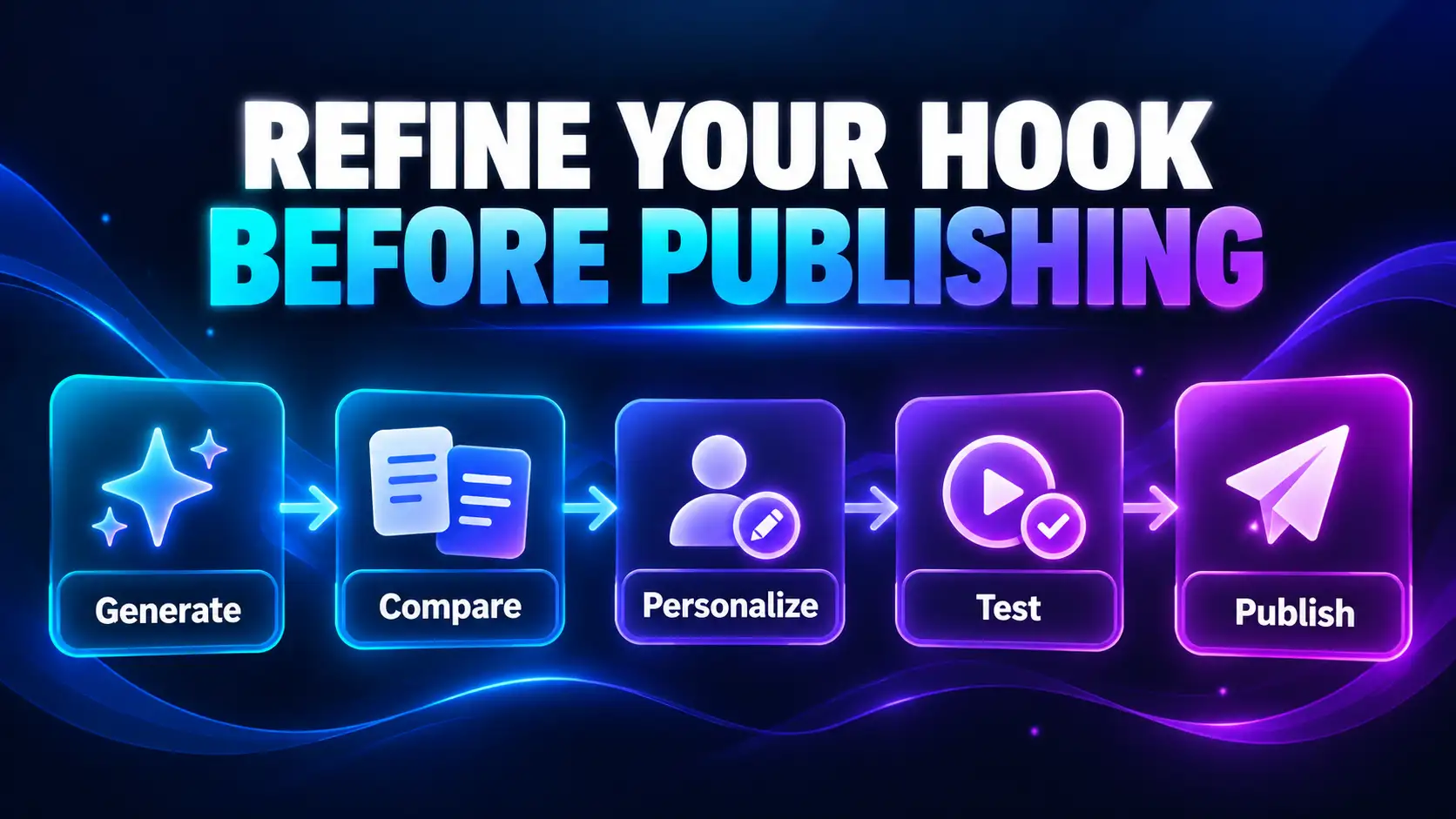
A Simple AI Hook Creation Workflow
- Define the exact topic of the content.
- Identify the target audience.
- Decide what the viewer should gain from watching.
- Choose several hook styles or angles.
- Generate multiple hook options with AI.
- Remove hooks that exaggerate or misrepresent the content.
- Select the strongest and clearest option.
- Edit it to match your natural voice.
- Read it aloud if it will be spoken.
- Use the final hook as part of the opening of your content.
A strong opening can earn attention, but the rest of the content still has to deliver useful information, entertainment, or value. A good hook and weak content will not create a strong overall experience.
Final Thoughts
AI can make hook generation faster by giving creators more opening ideas to compare and refine.
The best results come from giving the AI a clear topic, audience, purpose, and platform rather than asking for generic attention-grabbing phrases.
Generate several options, choose the strongest angle, and then rewrite the final hook so it sounds natural and accurately represents the content.
Create your next social media post with Krelyza
Explore practical AI tools for hooks, captions, content ideas, scripts, keywords, hashtags, calendars, and creator workflows.